Property Registration Process in Karnataka 2026
Stamp duty rates, registration fee and government portal procedures below are indicative for Karnataka in 2026 and are subject to legislative change — verify the current stamp duty schedule, Kaveri portal steps and applicable fees with a registered document writer or legal professional before proceeding.
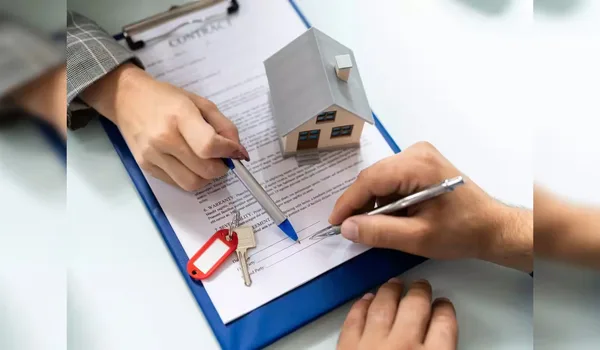
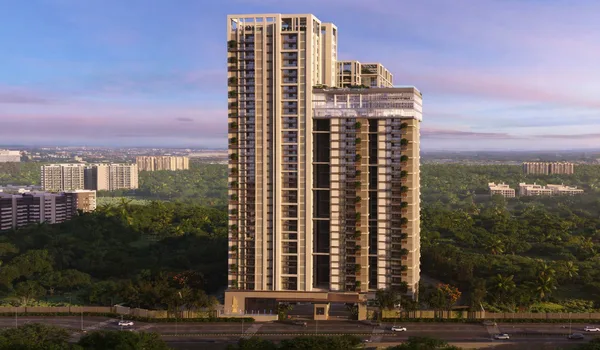
Registering a property in Karnataka involves more steps than most buyers anticipate. Beyond paying stamp duty, you need to verify the title, confirm the Khata status, pay through the Kaveri online portal at least 24 hours before your appointment, carry the right documents on registration day, and then initiate a Khata transfer after the sale deed is endorsed. Miss any of these and the registration is delayed or, worse, the title issues come to light only after you have already paid. This guide walks through each stage of the process as it stands in 2026 for an apartment buyer in Bangalore — including at Godrej Beacon in Yelahanka or any other RERA-registered project in the city.
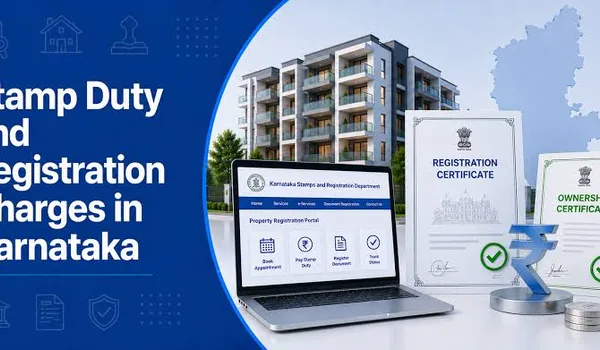
If you are buying an under-construction flat, also read our sale agreement guide before registration day, and our stamp duty and registration charges guide for a detailed cost breakdown.
Before You Book an Appointment — Due Diligence First
Registration day at the Sub-Registrar’s Office (SRO) is not the right time to discover a title defect. Complete these checks before you even touch the Kaveri portal:
Encumbrance Certificate (EC)
An Encumbrance Certificate lists every registered transaction on a property — sale, mortgage, gift, release deed, court attachment — for the period you specify. It is issued in Form 15 (if any transactions exist) or Form 16 (Nil EC, meaning a clean record for that period). The EC does not capture unregistered or oral agreements.
- How many years to check: A minimum of 13 years is standard; banks and home loan lenders require 30 years. For a clean purchase, pull a 30-year EC. The KaveriOnline portal has records from 1 April 2004; for pre-2004 records you must visit the Sub-Registrar’s Office directly.
- How to get it: Login to the KaveriOnline Services portal; select Encumbrance Certificate; enter the survey number, village, hobli, taluk and district; pay the fee online. The EC is typically issued within 5–7 working days and is valid for 30 days from the issue date.
Khata Verification
For properties within the BBMP / Greater Bengaluru Authority (GBA) jurisdiction, an A-Khata (now in digital e-Khata format) is mandatory for property registration. Since 1 July 2025, a valid e-Khata is a prerequisite for registration within GBA limits — registration is blocked without it. Confirm:
- The property has an A-Khata, not a B-Khata
- The e-Khata has been issued with a valid ePID number on the e-Aasthi portal
- For BDA-layout properties, a BDA No-Due Certificate is required and must be obtained from the BDA Estate Department separately (allow 5–15 working days)
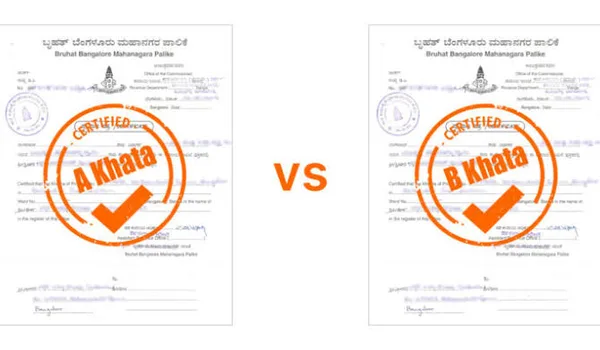
Our A-Khata vs B-Khata guide explains how to verify and correct Khata status.
Guidance Value Check
Stamp duty and registration fee in Karnataka are calculated on the higher of the actual sale price or the government-notified guidance value for that locality and property type. If your sale price is below the guidance value, the Kaveri 2.0 system will block the registration. Check the guidance value in advance on the KaveriOnline portal under “Know Your Property Valuation”. Note that Karnataka revised guidance values across Bengaluru by 6–15% in February 2026.
How Stamp Duty and Registration Fee Are Calculated in Karnataka
The amounts below are calculated on the higher of the actual sale consideration or the guidance value:
| Property Value | Stamp Duty |
|---|---|
| Up to ₹20 lakh | 2% |
| ₹21 lakh – ₹45 lakh | 3% |
| Above ₹45 lakh | 5% |
For Bangalore apartments above ₹45 lakh in BBMP / GBA jurisdiction, the effective all-in cost at registration is approximately 7.5–7.6% of the property value, made up of:
- Stamp duty: 5%
- Cess: ~0.5% of property value (applied in BBMP / GBA urban area)
- Surcharge: ~0.1% of property value (BBMP-specific urban surcharge)
- Registration fee: 2% (applicable from 31 August 2025; was 1% prior)
Karnataka has no stamp duty concession for women buyers. The 1% reduction that exists in Maharashtra does not apply here — stamp duty slabs are uniform for all buyers regardless of gender.
Stamp duty paid on the Agreement to Sell (ATS), if you registered one at the under-construction stage, is credited against the stamp duty on the final Sale Deed. You do not pay the full rate twice. The ATS stamp duty rate is currently 0.5% of the consideration under the Karnataka Stamp (Amendment) Act 2023.
Using KaveriOnline — What to Do Before Registration Day
The KaveriOnline Services portal is the mandatory gateway for all urban property registrations in Karnataka. Physical stamp paper has been replaced by e-stamps generated through the portal. The step-by-step online process:
- Create a login on the KaveriOnline Services portal using Aadhaar-based eKYC
- Pre-Registration Data Entry (PRDE): Enter all property details, party details (buyer, seller, witnesses) and upload documents; receive a PRDE reference number
- Calculate and pay stamp duty + registration fee online — payment must be completed at least 24 hours before your SRO appointment; UPI, net banking and debit cards are accepted
- Book an SRO appointment: Select the Sub-Registrar Office with jurisdiction over the property’s location (not your home address) and choose a date and time slot
The portal also allows you to download the Encumbrance Certificate, check the guidance value, track your registration status and download a digitally-signed certified copy of the registered deed after the process is complete. SROs in Bengaluru now work on the 2nd and 4th Saturdays and Sundays on a rotational basis (effective May 2025) — useful if weekday slots are full.
Kaveri 3.0, which promises fully online registration without an SRO visit, was announced in the Karnataka Budget 2026-27 with a ₹65 crore allocation. It is not yet operational as of mid-2026. Physical biometric verification at the SRO remains mandatory for all current registrations.
Documents to Carry on Registration Day
All parties — buyer, seller and two witnesses — must be physically present at the SRO. Witnesses must not be family members of either party.
| Party | Documents Required |
|---|---|
| Seller | Original title deed / mother deed • Encumbrance Certificate (30-year recommended) • e-Khata / Khata Certificate + Extract (A-Khata mandatory in GBA) • Latest property tax receipt (no arrears) • Approved building plan (from BBMP / BDA / relevant authority) • Occupancy Certificate + Completion Certificate • NOC from Apartment Association (for flats) • Aadhaar card • PAN card • RERA registration certificate (for new apartments) |
| Buyer | Aadhaar card • PAN card (mandatory if consideration ≥ ₹50 lakh) • Stamp duty + registration fee payment proof from KaveriOnline (paid at least 24 hrs before) • 2 passport-size photographs • TDS payment proof (Form 26QB / Form 141 challan) if property ≥ ₹50 lakh — see note below |
| Each Witness | Valid government-issued photo ID (Aadhaar preferred) • Must be physically present |
| BDA-layout properties only | BDA No-Due Certificate (obtain from BDA Estate Department, Kumara Park East; allow 5–15 working days) |
TDS Obligation for the Buyer When Purchase Price Is ₹50 Lakh or More
Under Section 194-IA of the Income Tax Act, the buyer must deduct 1% TDS from the payment made to a resident seller when the sale consideration (or the guidance value, whichever is higher) is ₹50 lakh or more. Key points:
- TDS is deducted by the buyer, not the seller, and is deposited with the government
- Budget 2025 widened the TDS base: Incidental charges paid to the builder — parking charges, club membership fees, electricity connection fees, maintenance deposits — are now explicitly included in the “consideration” for TDS calculation. If the flat base price is ₹85 lakh and parking is ₹5 lakh, TDS is computed on ₹90 lakh
- Form to file: For purchases where TDS was deducted up to 31 March 2026, file Form 26QB within 30 days of the end of the month of deduction. For purchases from 1 April 2026 onwards, the form changes to Form 141 (Schedule B) under the new Income Tax Act 2025 (Section 194-IA is re-codified as Section 393(1)); the 1% rate and 30-day deposit deadline remain unchanged
- The seller receives Form 16B as the TDS certificate
- TDS does not apply if the seller is an NRI — in that case, a different TDS regime under Section 195 applies at much higher rates; consult a tax professional
What Happens on Registration Day at the SRO
Arrive at the Sub-Registrar’s Office at your booked slot with all documents. The on-site process typically takes 15–30 minutes:
- Document verification: The Sub-Registrar’s clerk cross-checks your physical documents against the PRDE uploads in the Kaveri system
- Biometric capture: Thumb impressions and photographs of all parties (buyer, seller and witnesses) are captured on the SRO’s biometric device
- Execution and signing: The sale deed is signed by all parties before the Sub-Registrar
- Endorsement: The Sub-Registrar stamps and endorses the deed; all documents are scanned and uploaded to the Kaveri system in real time
- Collect receipt: You receive a registration receipt on the same day; the digitally-signed registered copy can be downloaded from the Kaveri portal within a few days
How long must you register after signing the sale deed? Under Section 23 of the Registration Act 1908, the sale deed must be presented at the SRO within 4 months of execution — not 30 days as is widely repeated. Section 25 permits a further extension to 8 months with a fine of up to 10 times the registration fee, but only for genuine unavoidable reasons. Beyond 8 months, the document cannot be registered and is legally void for title transfer.
After Registration — Khata Transfer and Mutation
Registration transfers legal title, but it does not automatically update the revenue records. You must separately apply for a Khata transfer (mutation) to move the property into your name for property tax purposes, home loan servicing and future resale.
For BBMP / GBA Properties
Note: BBMP was dissolved on 2 September 2025 and replaced by the Greater Bengaluru Authority (GBA) with five city corporations (North, South, East, West, Central). Khata transfers are now handled by the relevant GBA corporation. The e-Aasthi portal (bbmpeaasthi.karnataka.gov.in) remains the digital gateway, but the file migration is causing processing delays of up to 140–180 days as of mid-2026.
The online mutation process on e-Aasthi:
- Login with mobile OTP; select “eKhata Mutation / Transfer”; enter your 10-digit ePID
- Upload documents: registered sale deed, seller’s Khata certificate, latest property tax receipt, EC, OC (for new construction), NOC from association, Aadhaar and PAN of buyer and seller
- Complete Aadhaar-based e-KYC for both buyer and seller
- A 7-day public objection window opens automatically; if no valid objection is filed, clean-title cases receive automatic approval
- Mutation fee: 2% of the stamp duty paid (minimum ₹500), plus application and processing fees of approximately ₹320–350 total
The Sakala Act mandates Khata transfer within 30 working days of a complete application. Track progress on the Sakala portal. The registered sale deed and Khata transfer together complete your ownership record.
For BDA-Layout Properties
BDA Khata transfers are processed through Seva Sindhu and require a physical visit to the BDA office. A field inspection is mandatory; allow 30–45 working days for clean-title cases. The mutation fee basis for BDA properties is 2–5% of the guidance value (different from BBMP’s 2% of stamp duty formula).
Frequently Asked Questions
1. What is the total stamp duty and registration cost for a Bangalore apartment above ₹45 lakh in 2026?
For a flat priced above ₹45 lakh in BBMP / GBA jurisdiction, the all-in cost at registration is approximately 7.5–7.6% of the property value: 5% stamp duty + ~0.5% urban cess + ~0.1% surcharge + 2% registration fee (the 2% registration fee has been in force from 31 August 2025, doubled from the earlier 1%). Calculate this on whichever is higher — the actual sale price or the government guidance value for that locality.
2. Is there a stamp duty concession for women buyers in Karnataka?
No. Karnataka does not offer any stamp duty concession for women buyers. The 5%/3%/2% slabs apply uniformly to all buyers regardless of gender. The concession that some buyers have heard of is specific to Maharashtra and does not apply in Karnataka.
3. Within how many days must I register a property after signing the sale deed?
Under Section 23 of the Registration Act 1908, the sale deed must be presented to the Sub-Registrar for registration within 4 months of the date of execution. A further extension to 8 months is possible under Section 25, but only on proof of urgent necessity or unavoidable accident, and with a fine of up to 10 times the registration fee. Beyond 8 months, the document cannot be registered and is void for the purpose of title transfer.
4. What is an Encumbrance Certificate and how many years should I check?
An Encumbrance Certificate (EC) lists all registered transactions on a property — sales, mortgages, court attachments, gifts — for the period you specify. A Form 15 EC means transactions exist; a Form 16 (Nil EC) means the property has a clean record for that period. For a regular apartment purchase, check at least 13 years; for home loan applications, banks mandate 30 years. The KaveriOnline portal provides EC data from 1 April 2004 onwards; pre-2004 records require a visit to the Sub-Registrar’s Office.
5. Is TDS applicable when buying a flat for more than ₹50 lakh?
Yes. Under Section 194-IA of the Income Tax Act, the buyer must deduct 1% TDS from amounts paid to a resident seller when the consideration (or guidance value, whichever is higher) is ₹50 lakh or more. Since Budget 2025, the TDS base includes not just the base price but also incidental charges such as parking, club membership and maintenance deposits. File Form 26QB within 30 days of deduction (for purchases up to 31 March 2026) or Form 141 (Schedule B) for purchases from 1 April 2026 onwards.
6. How long does the Khata transfer take after registration?
The Sakala Act mandates Khata transfer within 30 working days of a complete application on the e-Aasthi portal. In practice, due to the ongoing migration from BBMP to the five new GBA corporations (the transition took effect September 2025), processing times of 45–90 days are common for routine cases as of mid-2026, with complex cases taking longer. Apply promptly after registration, track on the Sakala portal and escalate if the 30-working-day mandate is breached.
Conclusion
Property registration in Karnataka in 2026 is a multi-stage process that begins well before the SRO appointment. Pull a 30-year EC, confirm the e-Khata status, check the guidance value and complete your stamp duty payment on KaveriOnline at least 24 hours before your slot. On registration day, carry all documents for buyer, seller and two unrelated witnesses. If your purchase price exceeds ₹50 lakh, deduct 1% TDS from the seller and file the appropriate form (Form 26QB until March 2026, Form 141 thereafter). After registration, initiate the Khata transfer on e-Aasthi without delay — the registered deed and the Khata mutation together complete your ownership record. The entire process from due diligence to mutation typically takes 60–90 days in 2026, with Khata transfer accounting for most of that time under the ongoing BBMP-to-GBA transition.
For a detailed cost breakdown, read our stamp duty and registration charges guide. For the agreement stage before registration, see our sale agreement guide.
Godrej Beacon Blog