A-Khata vs B-Khata in Bangalore — Explained for 2026
Khata rules and the B-Khata to A-Khata conversion window change from time to time — confirm the current position on BBMP’s e-Aasthi portal or with the jurisdictional sub-registrar before you buy.
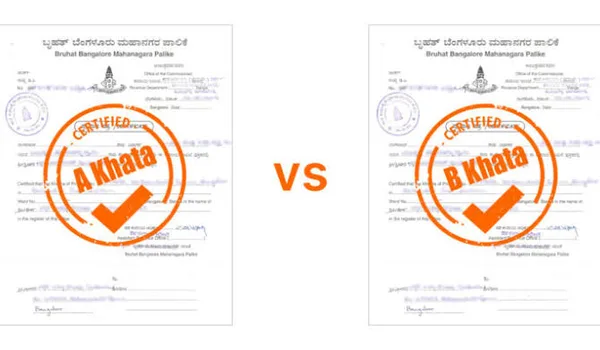
Before you buy an apartment like Godrej Beacon in Yelahanka, one document decides whether your purchase is clean, loanable and easy to resell: the Khata. In Bangalore the difference between an A-Khata and a B-Khata is one of the most misunderstood parts of a property deal, and getting it wrong can block your home loan or trap you in a semi-legal title. This guide explains what a Khata is, how A-Khata and B-Khata differ, what the 2024–2025 e-Khata reform changed, and the limited 2026 window to convert a B-Khata to an A-Khata.
For the wider market read our Yelahanka apartment guide. To plan the money side, see our home loan guide and stamp duty and registration guide, and before you book, learn how to verify a project’s RERA registration. Rules and fees change, so treat the figures below as a 2026 orientation and confirm the current position with the authorities before you transact.
What Is a Khata?
A Khata is the municipal property account maintained by the civic body — the BBMP in Bangalore. It records the owner’s name, the property’s size and location, its identification number and its tax liability. Crucially, a Khata is evidence that a property has a tax account, not proof of ownership: it does not, by itself, establish title. You still need the registered sale deed and a clean title chain for that. A Khata comes in two parts — the Khata Certificate, a short confirmation that the property is entered in the register in your name (needed to register, pay tax and apply for loans and utilities), and the Khata Extract, a detailed record of the property’s dimensions, usage and assessed value used for due diligence and resale. Banks and buyers usually ask for both.
A-Khata vs B-Khata — Quick Reference
| Feature | A-Khata | B-Khata |
|---|---|---|
| Legal status | Fully compliant with municipal law and by-laws | Semi-legal; recorded for tax collection only |
| Home loan | Accepted by all banks | Often refused by public-sector banks; limited NBFC lending on stricter terms |
| Building plan sanction | Available | Not available |
| Trade licence | Available | Not available |
| Resale / transfer | Clean and straightforward | Harder; smaller buyer pool |
Indicative comparison for 2026. Individual bank and municipal policies vary — confirm your property’s status on the e-Aasthi portal.
What A-Khata Means
An A-Khata marks a property that is fully compliant with the Karnataka Municipal Corporation Act and the applicable building by-laws — built on approved, converted land with taxes and charges paid. An A-Khata property can obtain a building-plan sanction, a trade licence where relevant, and a home loan from any bank, and it resells cleanly. For most buyers of a new, RERA-registered apartment from an established developer, the property is an A-Khata (or its e-Khata equivalent), and this is the status you should insist on.
What B-Khata Means — And What It Limits
A B-Khata is a separate register the municipality maintains for properties that are irregular in some way — unauthorised construction, layout or setback deviations, or unpaid betterment charges. The civic body recognises a B-Khata for the narrow purpose of collecting property tax; it does not confer the same rights as an A-Khata. In practice a B-Khata property:
- is usually refused a home loan by public-sector banks, with only some NBFCs lending at higher rates and stricter terms;
- cannot get a fresh building-plan sanction, so construction or major renovation is not legally approvable;
- cannot obtain a trade licence, and remains exposed to enforcement action on the underlying irregularity;
- has a smaller resale pool, because most buyers who need financing will walk away.
A B-Khata is not automatically worthless — many are regularisable — but it is a caution flag that calls for careful legal checking and a clear route to conversion before you commit.
The e-Khata / e-Aasthi Reform (2024–2025)
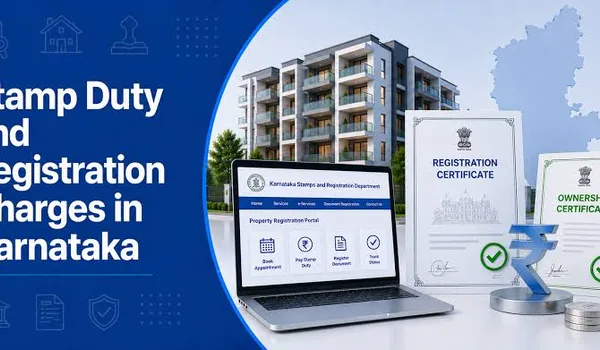
Bangalore has moved Khata records online. The e-Khata is BBMP’s digital property record, generated and managed through the e-Aasthi portal, holding ownership, ward, property-identification and tax data in one place. Since 2024 an e-Khata has been made mandatory for property registration within BBMP limits, and it has since been extended to online building-plan applications. For existing properties BBMP first issues a draft e-Khata auto-populated from its records; the owner verifies the details and completes an Aadhaar-based eKYC to convert it into a final e-Khata, which is the version banks and the sub-registrar treat as valid. Importantly, digitising a B-Khata does not upgrade it — an e-Khata generated on a B-Khata property remains a B-Khata until it is formally converted.
B-Khata to A-Khata: The 2026 Conversion Window
In 2026 the Karnataka government opened a limited-period drive to move eligible B-Khata properties to A-Khata at a sharply reduced fee. The conversion charge was cut from the usual 5% to 2% of the guidance value for a 100-day window running from 15 May 2026 to 23 August 2026, after which it reverts to 5%. To qualify, the property must have had a B-Khata recorded in the BBMP system on or before 30 September 2024 and hold a valid e-Khata; a small application charge applies in addition to the conversion fee. On an ₹80 lakh guidance value, converting at 2% costs about ₹1.6 lakh against roughly ₹4 lakh at the old 5% — a meaningful saving if you own, or are buying, an eligible B-Khata property. Because the window and eligibility rules are administered locally and can change, confirm the current status on the e-Aasthi portal before relying on it.
How to Check or Apply for Your e-Khata
You can check and apply for an e-Khata online through BBMP’s e-Aasthi portal (bbmpeaasthi.karnataka.gov.in), also reachable via the state’s Seva Sindhu services portal. You register with your Aadhaar and mobile number, search for the property by its identification number or owner name, upload the supporting papers and complete eKYC. Documents typically include the registered sale deed, an Encumbrance Certificate, the owners’ Aadhaar, the latest property-tax receipt and the electricity-connection reference. A nominal service charge applies, separate from the stamp duty and registration charges you pay on the sale deed itself.
What Buyers Should Do
Before you pay any advance, ask for the seller’s Khata Certificate and Khata Extract (or the e-Khata) and confirm it is an A-Khata, not a B-Khata. Match the name, property dimensions and identification number against the sale deed and the Encumbrance Certificate, and have a lawyer verify the title chain independently — a Khata alone is not proof of ownership. If the property is a B-Khata, treat conversion as a condition of the deal: establish that it is eligible and factor the conversion cost and time into your decision. For a new apartment, insist on the A-Khata / final e-Khata being in place at registration so your loan and future resale are never in question.
Frequently Asked Questions
1. What is the difference between A-Khata and B-Khata?
An A-Khata marks a property that is fully compliant with municipal law and building by-laws — it can get a building-plan sanction, a home loan from any bank and a clean resale. A B-Khata is a separate register for irregular properties, recognised only for tax collection; it usually cannot get a plan sanction or a public-sector home loan.
2. Can I get a home loan on a B-Khata property?
Usually not from public-sector banks, which generally decline B-Khata properties. A few NBFCs may lend at higher interest rates and on stricter terms. For a smooth loan approval you want an A-Khata or a final e-Khata on an A-Khata property.
3. What is e-Khata and is it mandatory?
e-Khata is BBMP’s digital Khata record, managed through the e-Aasthi portal. Since 2024 it has been made mandatory for property registration within BBMP limits, so you need a valid final e-Khata to register a property in Bangalore.
4. Can a B-Khata be converted to an A-Khata?
Yes, if the property is eligible. In 2026 Karnataka opened a window (15 May to 23 August 2026) to convert eligible B-Khata properties at 2% of guidance value instead of 5%, for properties with a B-Khata recorded on or before 30 September 2024 and a valid e-Khata. Confirm eligibility on the e-Aasthi portal.
5. Is a Khata the same as a title deed?
No. A Khata is a municipal tax account that records who is liable for property tax; it is not proof of ownership. Ownership is established by the registered sale deed and a clean title chain, which a lawyer should verify separately.
6. What is the difference between a Khata Certificate and a Khata Extract?
A Khata Certificate is a short confirmation that the property is entered in the municipal register in your name, needed to register and to apply for loans and utilities. A Khata Extract is a detailed record of the property’s dimensions, usage and assessed value, used for due diligence and resale. Buyers usually need both.
Conclusion
In Bangalore the Khata is not paperwork to skim over — it decides whether your property is loanable, buildable and easy to resell. Aim for an A-Khata or a final e-Khata on an A-Khata property, treat a B-Khata as a flag that needs a clear conversion route, and remember that even a clean Khata is not a substitute for verifying the title. If you own or are buying an eligible B-Khata property, the 2% conversion window open until 23 August 2026 is worth acting on before it closes.
To check the Khata and the full paperwork on a specific home, book a site visit and have it reviewed end to end.
Godrej Beacon Blog