How to Read a Sale Agreement Before Signing 2026
The rules, stamp duty rates and RERA provisions below are indicative for Karnataka in 2026 and are subject to legislative change — verify the current stamp duty schedule and applicable RERA rules with a registered legal professional before signing.

The sale agreement — formally the Agreement to Sell or Agreement for Sale — is the document you sign before you get possession of a flat. It sets the price, the payment schedule, the possession date, the penalty terms and your rights if anything goes wrong. Most buyers treat it as a formality and sign at whatever the builder hands them. That is a mistake that can prove very expensive. The agreement is the founding document of your legal relationship with the developer, and the clauses buried in it determine what you can enforce later. This guide takes you through every critical checkpoint for a Karnataka buyer in 2026 — starting with a flat at Godrej Beacon in Yelahanka or any other under-construction project in Bangalore.
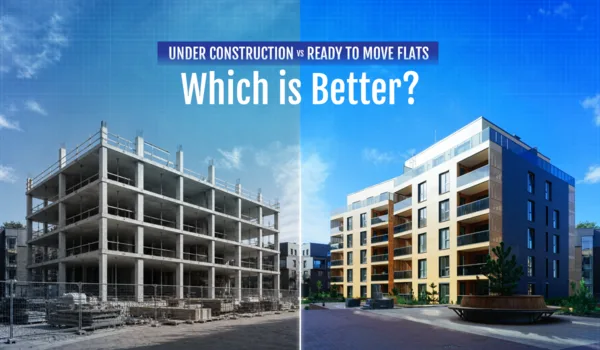
Read our RERA verification guide before you even reach the agreement stage — you need to confirm the project is registered before you pay anything. And read our under-construction vs ready-to-move guide for the wider context of what you are buying into.
Agreement to Sell vs Builder-Buyer Agreement vs Sale Deed
Before you can read an agreement intelligently, you need to know what kind of document it is and where it sits in the transaction sequence:
| Document | What It Is | Transfers Ownership? | Registration |
|---|---|---|---|
| Allotment Letter | Booking confirmation; issued after token payment (<10% of cost) | No | Not required |
| Agreement to Sell / Builder-Buyer Agreement (ATS/BBA) | Binding contract fixing price, schedule, possession date, penalties; RERA-compliant format mandatory | No — creates personal rights, not property rights | Mandatory once buyer has paid >10% of cost (RERA Sec 13) |
| Sale Deed / Conveyance Deed | Final document that actually transfers title to the buyer | Yes — ownership passes on registration | Mandatory under Registration Act 1908 |
The typical sequence for an under-construction purchase is: Allotment Letter → ATS/BBA (once >10% paid) → Sale Deed (at or after possession). The ATS is not the end of the transaction; it is the contract that governs the journey. Everything in the Sale Deed should be consistent with the ATS.
Under RERA Section 13(1), a builder cannot accept more than 10% of the property cost without first executing a registered Agreement to Sell. If a builder asks for a large upfront payment before any agreement is signed or registered, that is a breach of RERA — refuse and insist on the ATS first.
What RERA Mandates the Builder Include in the ATS
The Real Estate (Regulation and Development) Act 2016, Section 13(2), requires the ATS to contain at minimum:
- The carpet area (RERA definition, not super built-up) of the apartment being sold
- The agreed total consideration and the mode of payment
- A construction-stage linked payment schedule
- A specific possession date
- The rate of interest payable by the promoter in case of delay — and by the allottee in case of default (must be symmetric)
- Details of common areas and proposed date of handover to the association
- Parking specifications — number, type, dimensions and location
- Development particulars and construction specifications
Karnataka has gone further: Karnataka RERA Rule 8A (effective 12 June 2020) requires builders to use a standardised agreement format (Annexure-A). Any prior documents signed by the allottee “shall not be construed to limit the rights and interests of the allottee” — so a builder cannot use a pre-ATS letter or booking form to waive your RERA rights.
All payments must be made by account-payee cheque, demand draft or online transfer. Cash payments for property are prohibited under RERA.
Carpet Area — The Rule Every Buyer Must Know
RERA Section 2(k) defines carpet area as the net usable floor area of an apartment, excluding external walls, areas under service shafts, and exclusive balcony or open terrace area. Staircase wells, lifts, corridors and lobbies are not included in your carpet area — those are shared spaces counted under the super built-up area (SBA).
| Measurement | What It Includes | Typical % of SBA |
|---|---|---|
| Carpet Area | Net usable interior space only | ~70–75% |
| Built-Up Area | Carpet + wall thickness + exclusive balcony | ~85–90% |
| Super Built-Up Area (SBA) | Built-up + proportionate share of lobbies, lifts, corridors | 100% |
RERA mandates pricing in carpet area only. Any ATS that prices the apartment in super built-up area violates RERA. Always calculate your effective per-square-foot cost against carpet area, not SBA. A flat quoted at ₹7,500 per sq ft on 1,400 sq ft SBA works out to ₹10,500–10,700 per sq ft on the ~1,000 sq ft carpet area — a very different number.
The ATS must state the carpet area, and the builder is allowed a variance of ±3% only. If the actual delivered flat is smaller by more than 3%, you are entitled to a refund of the excess amount paid (with interest); if it is larger by more than 3%, the builder cannot charge you for the extra area beyond 3%.
Payment Schedule — What Is Safe and What Is a Red Flag
RERA’s intent is that payment schedules for under-construction property be construction-milestone linked, not arbitrary time-based demands. A safe, standard schedule looks like this:
- Booking / token: up to 10% (before ATS)
- On ATS registration: next instalment
- Foundation completion, plinth, slab milestones: progressive instalments per floor or slab stage
- Brickwork, plastering, flooring, plumbing: further stage payments
- Final 5–10%: on possession, only after OC (Occupancy Certificate) is in hand
RERA Section 4(2)(l)(D) further requires that 70% of all payments collected from buyers be deposited into a dedicated project bank account, to be used only for land and construction costs for that project. This 70% escrow rule limits the builder’s ability to divert your money to other projects.
Red flags on payment schedules: A time-linked schedule (demanding payments on calendar dates regardless of construction progress) is not aligned with RERA’s construction-linked intent. Any demand for payment before milestones are certified, or any request to pay more than 10% before the ATS is signed and registered, should be challenged. Hold the final 5–10% until the OC is in your hands.
Red-Flag Clauses to Watch Before You Sign
These are the clauses most commonly used to shift risk from the builder to the buyer, and the ones to challenge or negotiate before signing:
- Vague possession date. An ATS that says “approximately 36 months from commencement of construction” rather than a specific calendar date gives the builder no real deadline. RERA requires a specific date — insist on it.
- Asymmetric penalty rates. If the builder’s delay penalty is 9% per annum but the buyer’s default penalty is 18–24% per annum, that is a one-sided arrangement. RERA requires symmetric rates: the standard under K-RERA is based on SBI MCLR + 2% p.a. for both sides. Push back on any asymmetry.
- Broad force majeure. RERA recognises force majeure for wars, civil commotion, natural disasters and government orders directly affecting the project. Builders often try to insert “shortage of materials”, “labour disputes” or “market conditions” — courts have consistently refused to accept these as force majeure events under RERA. Do not let them stand.
- Unilateral amendment right. Any clause allowing the builder to change layout, specifications, materials or common areas without your written consent violates RERA Section 14. Under Sec 14, minor changes need written buyer consent; structural changes require consent of two-thirds of allottees. Any blanket amendment clause is invalid — strike it out.
- Excessive forfeiture on cancellation. The industry norm is that the builder may forfeit the booking amount (typically 10% of cost) if the buyer cancels without cause. Clauses that forfeit far larger sums or that impose no refund timeline on the remaining balance are negotiation points.
- Open-ended maintenance charges. If the ATS says maintenance rates will be “determined by the developer from time to time” with no cap, that is a blank cheque. Insist on a stated rate or a capped escalation mechanism.
- Super built-up area pricing. Any ATS that prices in SBA rather than carpet area violates RERA. Demand the carpet area price per square foot be stated explicitly.
Stamp Duty on the Agreement to Sell in Karnataka
When you register an ATS in Karnataka, stamp duty is payable. This is separate from and in addition to the stamp duty on the final Sale Deed:
- ATS without possession: Stamp duty currently applies at 0.5% of the sale consideration, following the Karnataka Stamp (Amendment) Act 2023 which removed the earlier ₹20,000 cap that applied under the old Article 5(e)(ii) formulation. Confirm the exact applicable article with a registered document writer or on the Kaveri Online Services portal before registration, as this has changed recently.
- ATS with possession: If the buyer takes possession under the ATS itself (unusual for under-construction), it is stamped at the same rate as a conveyance (i.e., the full Sale Deed slab rate).
- Registration fee: 2% applies on ATS registration as well (revised from 1% with effect from 31 August 2025).
- Credit on Sale Deed: Stamp duty paid on the ATS is adjusted against the stamp duty payable on the subsequent Sale Deed between the same parties for the same property. You do not pay full stamp duty twice.
For the full Karnataka stamp duty and registration calculation on the Sale Deed, read our stamp duty and registration guide.
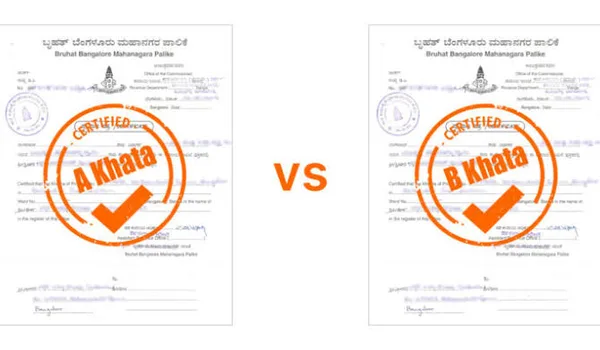
Also confirm the Khata status of the property before you sign — an A-Khata is essential for the bank loan and for resale. Our A-Khata vs B-Khata guide explains what to check.
Your Rights if the Builder Breaches the Agreement
Section 18 of RERA is the buyer’s primary remedy when the builder misses the possession date. The rights are absolute and unconditional — they cannot be diluted by ATS clauses, court orders on the builder, or force majeure claims. If the RERA-registered project misses its committed possession date, you have two options:
- Stay and claim interest: Continue in the project and claim monthly interest at SBI MCLR + 2% per annum on all amounts paid, from the missed possession date until the date of actual possession. This interest is payable by the builder without your having to exit.
- Withdraw and claim full refund: Exit the project and receive a full refund of all amounts paid, plus interest at MCLR + 2% p.a. from the date of each payment. The refund must be made within 45 days of your withdrawal notice.
If the builder breaches any other obligation under the ATS — delivers a smaller carpet area, changes specifications without consent, fails to hand over common areas as committed — Section 18(3) entitles you to compensation even without withdrawing from the project.
Section 31 of RERA is the procedural route: any allottee can file a complaint with the Karnataka RERA Authority (K-RERA) against the promoter online, and the Authority must pass orders within 60 days. For compensation claims, the Adjudicating Officer (a separate track from the Authority itself) handles the quantum assessment. From the Authority’s order you can appeal to the Real Estate Appellate Tribunal, and then to the High Court.
Only a RERA-registered project carries these statutory protections. Before you pay anything, verify the project registration number on the K-RERA portal — our RERA verification guide shows exactly how to do this.
ATS Checklist — Before You Sign
| Clause / Item | What to Check | Red Flag if... |
|---|---|---|
| RERA registration number | Present on the document; verify on K-RERA portal | Missing or cannot be verified |
| Possession date | Specific calendar date stated | Given as “approximately X months” |
| Carpet area | Stated in sq ft / sq m using RERA definition; priced per carpet sq ft | Priced or described in super built-up area |
| Payment schedule | Linked to construction milestones; no demand >10% before ATS | Time-linked; large advance before ATS signed |
| Penalty symmetry | Builder delay rate = buyer default rate (MCLR + 2% p.a.) | Builder rate < buyer rate; builder rate not stated |
| Force majeure definition | Limited to war, civil commotion, natural disaster, government order | Includes material shortage, market conditions, labour disputes |
| Amendment rights | Builder cannot change plans without written buyer consent (Sec 14 RERA) | Builder retains unilateral right to alter specifications |
| Cancellation & refund | Specific forfeiture amount (ideally 10%); refund timeline stated for balance | Large forfeiture; no refund timeline for balance paid |
| Maintenance charges | Rate or escalation cap stated | “As determined by developer” with no limit |
| 70% escrow compliance | ATS references separate project bank account per RERA Sec 4 | No mention; commingled with builder’s general funds |
| OC / possession linkage | Final payment linked to OC issuance; builder obligated to pursue OC | Possession “subject to OC” with no timeline obligation |
Do not skip the ATS review to save time at signing. Have a registered legal professional review the document against Karnataka RERA Rule 8A and the standardised Annexure-A format. It is the one document that will govern your rights for the next 3–5 years.
To understand the full transaction from RERA due diligence through to registration and possession, get in touch for details.
Frequently Asked Questions
1. Can a builder accept more than 10% of the cost before signing the Agreement to Sell?
No. Under RERA Section 13(1), a promoter cannot accept more than 10% of the cost of the apartment without first executing a registered Agreement to Sell. If a builder asks for a larger advance before any registered agreement, that is a breach of RERA. Insist on the ATS being signed and registered before you pay more than 10%.
2. What is the RERA-allowed carpet area variance between the ATS and actual delivery?
RERA allows a variance of plus or minus 3% of the carpet area stated in the ATS. If the delivered flat is more than 3% smaller, you are entitled to a refund of the excess amount paid with interest, within 45 days. If it is more than 3% larger, the builder cannot charge you for the excess. Any variation within 3% must be adjusted at the agreed per-unit rate.
3. How much stamp duty is payable on an Agreement to Sell in Karnataka?
Following the Karnataka Stamp (Amendment) Act 2023, the stamp duty on an Agreement to Sell (without possession) is currently 0.5% of the sale consideration. The registration fee is 2% (applicable from 31 August 2025). Stamp duty paid on the ATS is adjusted against the stamp duty on the subsequent Sale Deed, so you do not pay the full rate twice. Verify the current article with a registered document writer before registration, as this has been recently amended.
4. Can the builder change the specifications after I sign the ATS?
No, not without your consent. RERA Section 14 prohibits the promoter from making minor additions or alterations without the written consent of the allottee, and prohibits major structural alterations without the consent of at least two-thirds of allottees. Any ATS clause that purports to give the builder a unilateral right to change plans or materials is invalid under RERA.
5. What can I do if the builder delays possession beyond the agreed date?
Under RERA Section 18, you have two options for a RERA-registered project: stay in the project and claim monthly interest at SBI MCLR + 2% per annum on all amounts paid from the missed date until actual possession; or withdraw and claim a full refund of all amounts paid with the same interest rate, to be paid within 45 days of your withdrawal notice. These rights are absolute and cannot be waived by ATS clauses.
6. Is a construction-linked payment schedule mandatory under RERA?
RERA’s intent is that payment schedules be linked to construction milestones. A time-linked schedule (demanding payments on calendar dates regardless of construction progress) is not in keeping with the spirit of the Act. In practice, builders do use time-linked schedules and they are not explicitly banned if disclosed in the ATS; but you should push for a milestone-linked structure to ensure you are only paying for work actually completed.
Conclusion
The Agreement to Sell is the document that defines your rights for the entire under-construction journey. It must be registered before you pay more than 10% of the property cost; it must state the carpet area in RERA-defined terms; it must carry a specific possession date; and its penalty clauses must be symmetric. Red-flag clauses — vague possession dates, broad force majeure, unilateral amendment rights, asymmetric penalties and open-ended maintenance — are not unavoidable. They are starting points for negotiation. Karnataka RERA Rule 8A sets a standardised format: use it as your reference. If the builder breaches the agreement, Section 18 gives you an absolute right to either claim running interest on your payments or exit with a full refund plus interest — rights that no contract clause can take away. The single most important step is to verify the RERA registration before you sign anything, because every protection in this guide depends on the project being registered.
Read our RERA verification guide and stamp duty guide before you proceed to signing.
Godrej Beacon Blog